
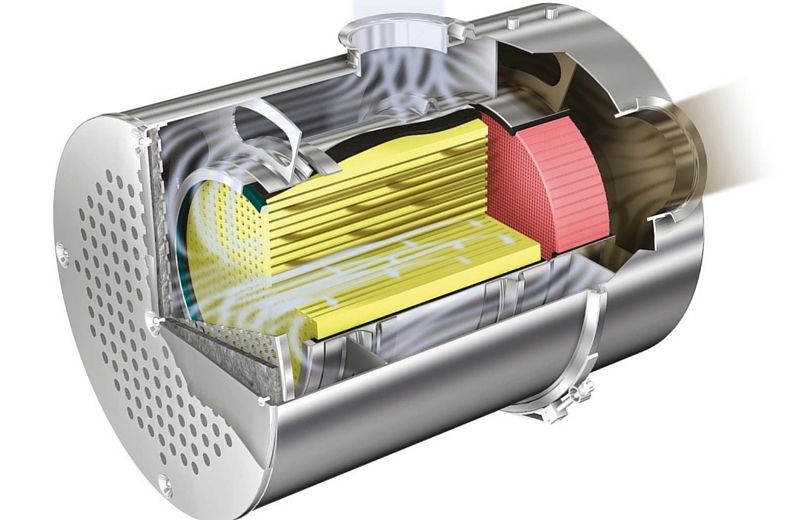
Diesel Particulate Filter Technology (DPF):
DPF is one of the technologies developed to reduce pollution in the air and improve the living conditions on Earth that enjoys an exclusive share in the vehicle market. Different countries in the world have passed laws at various periods that have made this technology mandatory in most diesel-powered vehicles. (The usage of DPF on-road vehicles goes back to 1985, and for non-road vehicles, some years prior.)
The effectiveness for the DPF device is based on its ability to absorb particulate matter (soot). Particulate matter created due to insufficient combustion of the fuel used in the engine can result in air pollution. But, the DPF system blocks this contamination. DPF absorbs and collects soot particles. Then it’s time to check the ECU will be required if the volume of soot that is deposited melts away the soot within the filter, raising heat of exhaust.
The problem with the DPF system can be seen during traffic. This is why the engine runs at a low RPM.
The causes of DPF Failure:
- DPF pressure sensor failure
- Unsatisfactory tuning of performance
- High mileage cars
oil passes across the turbo seals on the engine through the turbo seals and enters the exhaust housing.
Incorrect fuel injectors can deliver excessive amounts of fuel to the air/fuel mixture
EGR valve issues
In these scenarios, much dust can collect and clog the exhaust gas passage out of the engine. Of course, this is pre-defined by ECUs.
So, if you didn’t know, it is possible to empty the DPF filter on highways and intercity roads (when your engine is operating at a higher RPM.
The procedure of emptying the DPF is based on the car’s model and the ECU. When the DPF isn’t disposable (requiring regular replacement) then it needs to be cleaned up after 30,000 miles (or about six months) or else, it can cause a blockage of the DPF. However, regeneration should be completed every 5,000km which is typically performed automatically by sensors when they’ve examined the pressure difference. Regeneration can be conducted in three distinct methods:
1-in the initial type, and is also known as passive, the premise is that the dust in the filter build up and is discharged after a specific distance, when the engine is under a significant load as well as RMP in combination with the filters reaching the temperature of a certain threshold. This type of regeneration is generally employed for vehicles that are not traffic-related.
2–The second type of regeneration is called active regeneration. This kind of regeneration happens when the DPF doesn’t reach the temperature necessary for the release of soot, causing an unbalance in the pressure of the DPF. When this happens, ECU boosts the temperature and facilitates regeneration by injecting additional fuel.
3-The third kind of regeneration, known as manual regeneration, is carried out regularly at repair shops. The procedure is based on the instructions given to the ECU through the Car scanner device. The procedure is employed to raise the temperature and melt soot.
Various kinds in DPF systems
- Cordierite (Cordierite Wall Flow Filter)
- Ceramic (Ceramic Fiber Filter)
- Silicon Carbide (Silicon Carbide Wall Flow Filter)
The three models are the most popular DPF models in use. Apart from the price differences, the three models differ mostly in melting temperature and the size of the conduit. The differences in these areas will ultimately affect the high quality of final products.
In addition to the three models of filters mentioned above, additional filters, such as flow-through metal fiber filters and paper filters are also available Cordierite filter, which is among the more popular filter model.